
Single Mode vs Multimode Fiber: Networking Guide & Equipment
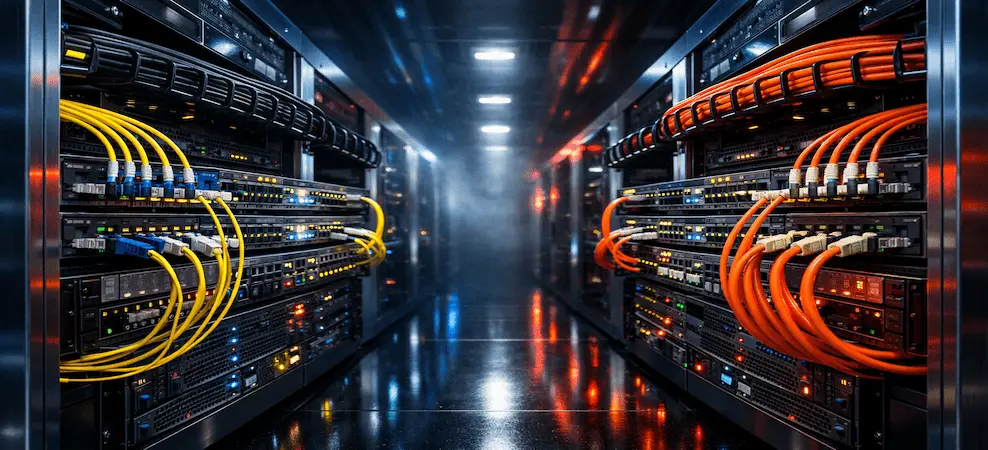
Learn single mode vs multimode fiber, networking hardware, cable management, PoE switches, and enterprise network tools.
In modern networking environments, understanding the difference between single mode and multimode fiber is crucial for IT professionals, network engineers, and enterprises seeking high-performance connectivity. From cable management to enterprise network security, selecting the right fiber optic infrastructure ensures efficiency, scalability, and reliability.
This guide explores singlemode vs multimode fiber, networking equipment, switching subsystems, and related technologies, including PoE network switches, patch panels, and surge protectors. We also provide a detailed SKU reference table for popular network media converters and transceivers.
Table of Contents
- Introduction to Fiber Optic Networking
- Single Mode vs Multimode Fiber
- What is Single Mode Fiber?
- What is Multimode Fiber?
- Key Differences Between Single Mode and Multimode Fiber
- Applications of Single Mode and Multimode Fiber
- Networking Equipment and Infrastructure
- Network Cable Management
- Patch Panels and Cabling Subsystems
- Networking and Switching Hardware
- PoE Network Switches
- Network Monitoring Tools
- Enterprise Network Security Solutions
- Surge Protectors for Networking
- Popular Network Media Converters and Transceivers
- FAQs
Introduction to Fiber Optic Networking
Fiber optic networking has revolutionized modern communications, offering faster data transfer rates, higher bandwidth, and improved signal integrity over traditional copper cabling. Fiber optics are critical in enterprise networks, data centers, and telecommunications infrastructure, providing reliable connectivity for mission-critical applications.
Two primary types of fiber optic cables dominate the market: single mode fiber (SMF) and multimode fiber (MMF). Selecting the right type depends on factors like distance, speed, and application requirements.
Single Mode vs Multimode Fiber
What is Single Mode Fiber?
Single mode fiber uses a small core diameter (typically 8–10 μm) that allows only one light mode to pass through. This design minimizes modal dispersion, enabling data transmission over long distances (up to 40+ km) without signal degradation. Single mode fiber is ideal for telecommunications networks, long-haul data connections, and high-speed enterprise backbones.
Advantages of Single Mode Fiber:
- Supports high bandwidth over long distances
- Low signal attenuation
- Compatible with high-speed applications (10G, 40G, 100G, and beyond)
What is Multimode Fiber?
Multimode fiber has a larger core diameter (50–62.5 μm), allowing multiple light modes to travel simultaneously. It is typically used for shorter distances (up to 600 meters) and is cost-effective for local area networks (LANs), data centers, and campus networking.
Advantages of Multimode Fiber:
- Easier to install and terminate
- Lower cost transceivers and cables
- Ideal for shorter-distance applications
Key Differences Between Single Mode and Multimode Fiber
| Feature | Single Mode Fiber | Multimode Fiber |
| Core Diameter | 8–10 μm | 50–62.5 μm |
| Light Modes | Single | Multiple |
| Distance | Long (up to 40+ km) | Short (up to 600 m) |
| Cost | Higher | Lower |
| Typical Use | Telecom, long-haul networks | LANs, data centers |
| Bandwidth | Higher | Moderate |
Understanding these differences helps IT professionals choose the right fiber for their networking and switching needs, ensuring optimal performance.
Applications of Single Mode and Multimode Fiber
Single mode fiber is widely used in:
- Enterprise backbone connections
- Telecommunications networks
- Long-distance WAN links
Multimode fiber is suitable for:
- Campus networks
- Data center connectivity
- Short-range high-speed applications
By selecting the right fiber type, businesses can optimize network efficiency, reduce signal loss, and improve overall network reliability.
Networking Equipment and Infrastructure
Network Cable Management
Efficient network cable management ensures proper organization, reduces signal interference, and simplifies maintenance. Using cable trays, ties, and structured cabling solutions enhances data center performance and supports high-density network environments.
Patch Panels and Cabling Subsystems
Patch panels act as central hubs for network cables, enabling quick reconfiguration and minimizing downtime. Combined with a well-designed network switching subsystem, they form the backbone of enterprise networking.
Networking and Switching Hardware
Modern networks require robust networking equipment like switches, routers, and transceivers. Features like PoE (Power over Ethernet) enable devices to receive both power and data over a single cable, simplifying deployment.
PoE Network Switches
PoE switches power devices like IP cameras, access points, and VoIP phones without separate power sources. They are critical in enterprise networking and cellular network equipment deployment.
Network Monitoring Tools
Monitoring tools help IT teams maintain network uptime, detect bottlenecks, and manage traffic efficiently. Advanced network monitoring software supports both single mode and multimode fiber networks.
Enterprise Network Security Solutions
Security solutions like firewalls, intrusion detection systems, and VPNs safeguard sensitive data. Enterprise networks rely on robust infrastructure to ensure both speed and security.
Surge Protectors for Networking
Surge protectors prevent equipment damage from voltage spikes, protecting switches, servers, and networking hardware. They are essential in both enterprise and small business setups.
Popular Network Media Converters and Transceivers
To support both single mode and multimode fiber, media converters and SFP/SFP+ transceivers are often used. Below is a table of popular SKUs you can reference:
| SKU | Product Description | Speed | Fiber Type |
| AXG99472 | Axiom Network Media Converter | 1000 Mbit/s | Multi-mode/Single-mode |
| AXG100819 | Axiom Network Media Converter | 10000 Mbit/s | Multi-mode/Single-mode |
| AXG100207 | Axiom Network Media Converter | 100 Mbit/s | Multi-mode/Single-mode |
| MC03-2XSFP-AX | Axiom Network Media Converter | 1000 Mbit/s | Multi-mode/Single-mode |
| AXG103615 | Axiom Network Media Converter | 1000 Mbit/s | Multi-mode/Single-mode |
| MCP32-F1-S3L10-AX | Axiom Network Media Converter | 1000 Mbit/s | 1310 nm Single-mode |
| AXG103680 | Axiom Network Media Converter | 1000 Mbit/s | 1310 nm Single-mode |
| JM532A | HPE Aruba Networking SFP28 | 25G | Single-mode |
| JM534A | HPE Aruba Networking SFP+ | 10G | Single-mode |
| MC110CS | TP-Link Network Media Converter | 100 Mbit/s | 1310 nm Single-mode |
FAQs
Q1: What is the main difference between single mode and multimode fiber?
A: Single mode fiber transmits one light mode over a small core, supporting long distances. Multimode fiber allows multiple light modes over a larger core, suitable for short distances.
Q2: Which fiber type is better for data centers?
A: Multimode fiber is commonly used in data centers due to lower cost and short-distance capability, but single mode fiber is preferred for high-speed backbone connections.
Q3: What are PoE network switches used for?
A: PoE switches provide both data and electrical power over a single Ethernet cable, powering devices like cameras, access points, and VoIP phones.
Q4: How can cable management improve network performance?
A: Proper cable management reduces interference, simplifies maintenance, and ensures optimal airflow in networking racks.
Q5: Why use surge protectors in network setups?
A: Surge protectors prevent damage to networking equipment from voltage spikes, improving equipment lifespan and reliability.
Conclusion
Understanding singlemode vs multimode fiber is fundamental for network engineers, IT administrators, and enterprise decision-makers. Coupled with proper network cable management, switching hardware, and security solutions, businesses can build efficient, scalable, and high-performance networks.
By referencing SKUs like AXG99472, JM532A, or MC110CS, organizations can select the right media converters and transceivers to support their fiber infrastructure. Whether upgrading a LAN, data center, or telecom network, these solutions ensure future-ready connectivity.
RECENT BLOG POSTS

CATEGORIES
- Laptop Comparisons
- Cisco Switches
- Laptop Comparisons
- Cisco Switches
Contact Us
Send us a Message
Fill out the form below to get started, and a member of our team will contact you as soon as possible